Image


In today’s rapidly evolving workforce, employers increasingly want new hires who can make an impact on Day 1. Many are also looking to upskill their existing employees. Skills-based credentials can give a hiring edge to newly minted graduates of programs at The Universities at Shady Grove, says UMCP R.H. Smith School of Business Assistant Dean for Civic Engagement Hank Boyd, Ph.D., J.D.
USG is expanding access to credential opportunities through the Google Career Certificate partnership with the University System of Maryland. Students, faculty, and staff have access to industry-recognized Google Career Certificates at no cost.
Offered through online learning platform Coursera, courses are self-paced. Participants earn credentials they can add to platforms like LinkedIn. The credentials help job seekers articulate their skills and stay competitive in a changing job market.
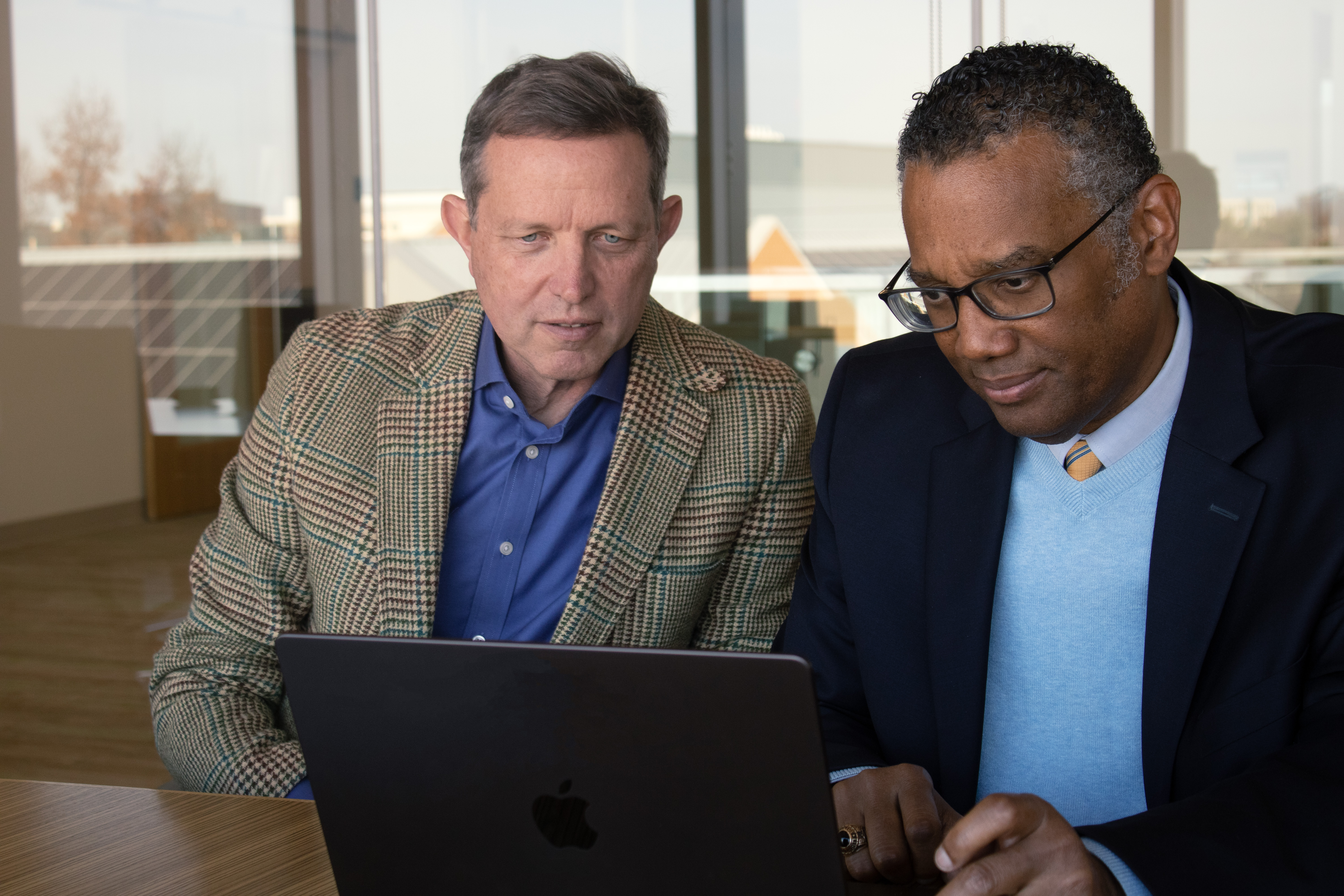
That value came into sharp focus for two seasoned educators—Boyd and fellow Smith School of Business Prof. Joe Bailey, Ph.D., associate dean of undergraduate programs. In the fall, the professors integrated the AI Essentials and Prompting Essentials certificates into a business course. For Boyd, the certificates were not just about learning AI concepts; they were about helping students understand how to build their professional brand.
“This is a great way for students to separate themselves from the pack,” Boyd explained. “If I’m an employer and I’m looking at a résumé and I see certificates in AI training, that gives you an edge in the marketplace.”
Boyd also emphasized the importance of responsible use. The Google coursework provided a structured, low-risk environment for 82 students to experiment with AI tools while developing judgment and critical evaluation skills through a “human-in-the-loop” approach. Rather than treating AI as a shortcut, the certificates helped students build fluency and confidence. These skills are increasingly relevant across disciplines.
For faculty and staff, the initiative offers a way to enhance coursework, advising conversations, and co-curricular experiences. As Boyd’s experience shows, faculty can integrate without overhauling course content. In Boyd’s class, certificate modules functioned as a self-paced assignment completed outside of class and counted as a manageable portion of a student's overall grade.
Khanh Vi Doan, an accounting major set to graduate in May and a student in Boyd’s class, shared: “I found these AI courses to be very valuable. At the current speed of AI advancements, having a better understanding of how AI works and improving prompt engineering skills would give students like me an advantage as we are preparing for the workforce.”
Outside the classroom, UMCP Information Science major Mariama Thiam is enrolled in Data Analysis with Python specialization. With graduation approaching this spring, she is thinking about how to position herself for long-term career growth. For Thiam, pairing a graduate degree with targeted technical credentials is a strategic way to stand out.
“I’m considering graduate school options, and it seems like a solid plan for me includes pursuing a more general master’s degree, like a master's of business administration, complemented by certificates in very specific skill sets,” she said. By combining both breadth and specialization, she sees certificates as a way to open doors across industries while signaling concrete, job-ready expertise to employers.
But the opportunity isn’t just for students.
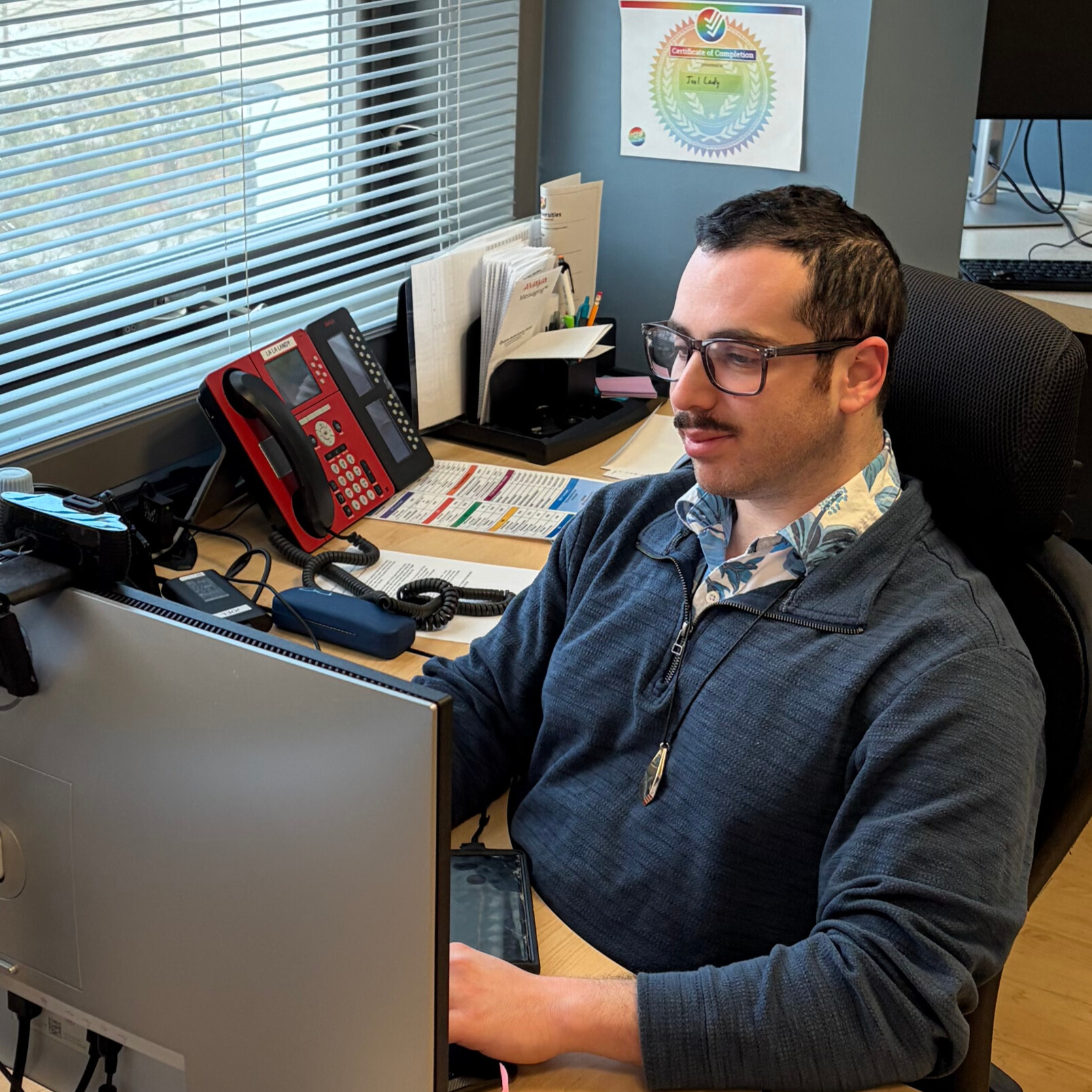
Joel Landy, an IT support assistant with USG’s Office of Information Technology Service Desk, completed the AI Essentials and Prompting Essentials certificates, alongside about 20 colleagues, to strengthen his professional skill set. What he gained, he explained, was more than technical knowledge. The program sharpened his ability to use AI responsibly and strategically—when to rely on AI, when to intervene, and how to refine prompts to get better results.
“It is training us to ask the right questions,” he said. That skill translates directly into his daily work. Landy anticipates using AI to draft clearer documentation, streamline internal processes, and analyze trends more efficiently. He’s now pursuing the Project Management Professional certificate—a step that reflects the program’s broader goal: encouraging continuous learning and adaptability.
Since the program’s launch last year, the menu of options has expanded, giving participants more choice in how and what they learn, said Mary Lang, Chief Strategy Officer whose Division of Academic Strategy, Planning, Innovation, Research & Engagement (ASPIRE) team members have led the initiative at USG in collaboration with USM Kirwan Center for Academic Innovation.
There are now three levels available—specializations, certificates, and advanced certificates—ranging from just a few hours of coursework to months-long, in-depth study. Whether someone is looking to explore a new topic quickly, build foundational skills, or pursue deeper expertise, the range of formats and time commitments allows for tailoring the experience to one’s goals and schedules.
Beyond skill acquisition, participants can tell a compelling story about who they are, what they know, and the value they bring to the workplace. Boyd underscored that the advantage is as much about timing as it is about content. While access is currently free to our campus community and the credentials still relatively distinctive, the opportunity won’t stay rare for long.
“Enjoy this edge while you have it,” he said, encouraging students, faculty and staff to take advantage of this fully funded opportunity now, while it still sets them apart.