Image



USG maintains compliance with federal and state environmental regulations and overall protection of environmental resources. Staff work closely with University of Maryland, College Park in managing environmental risk by overseeing policies, procedures, and education and training programs.
Did you know that a spill of only one gallon of oil into a stream, river, pond or bay can contaminate up to a million gallons of water? Environmental stewardship of oil-based material storage and handling are important for protecting human health, ecosystems and waterways in general.
Campus has over 2,500 gallons of oil-based products such as diesel fuel, mineral and hydraulic oil, and used cooking oil or grease stored in above ground storage tanks (AST) that are 55-gallons or greater. The Environmental Protection Agency and State of Maryland set requirements for facilities with a total AST capacity exceeding 1,320 gallons oil. These facilities are required to managed oil operations including response to environmental spills under a Spill Prevention Controls and Countermeasures Plan (SPCC) to protect waterways and the environment.
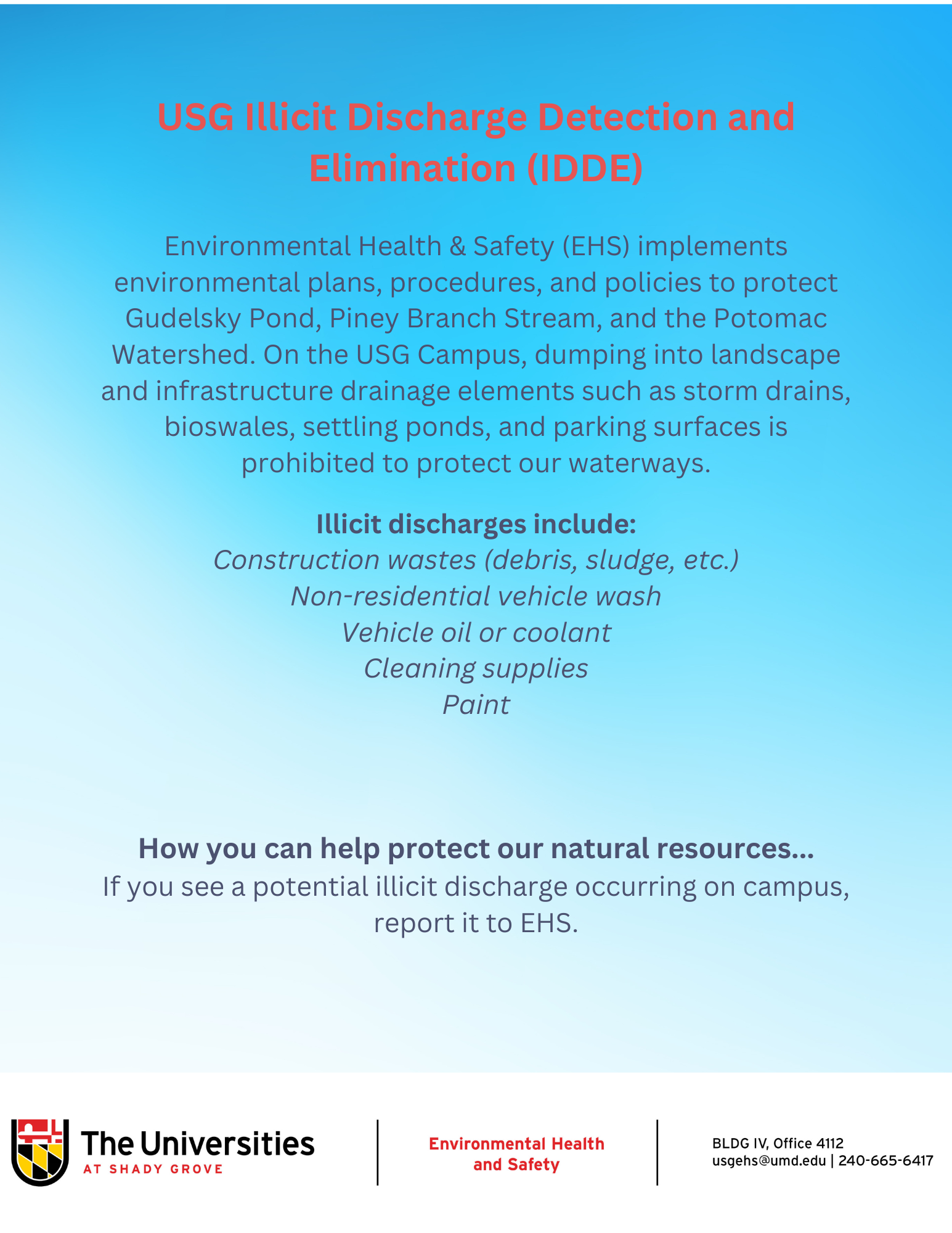
Campus holds a National Pollution Discharge Detection and Elimination System (NPDES), Municipal Separate Storm Sewer System (MS4) Phase II General Permit, which covers the discharge of all stormwater runoff that enters the storm drain system, including discharges from building rooftops, roads, pavement, parking lots, landscape elements, and construction runoff for protection of Maryland waterways. The permit requires the university to meet certain discharge limitations and employ Best Management Practices (BMPs) to minimize pollutants discharged into stormwater. Additional Stormwater Management information can be found on the Maryland Department of the Environment website.
State and Federal - MS4 Phase II Fact Sheet
Chesapeake Bay Restoration - MS4 Phase II Permit Fact Sheet
National Menu for Best Management Practices - Illicit Discharge Detection and Elimination
Maryland's Stormwater Management Act
Maryland Department of the Environment (MDE) - Water Quality
Montgomery County Maryland, Illicit Discharge Ordinance
Environmental Protection Agency (EPA) - Water Topics
Metropolitan Washington Council of Governments - Water Resources